The Fujifilm GFX 100s II mediumformat camera has a so called "35mm" mode. It means nothing else than you can use the camera with a lens, like a fullframe camera. And still get 60 MP per image.
That's it.
Which is a lot. Given that most of my cameras only have 20 MP, and the EOS R has 30 MP. So, 60 MP in a fullframe camera, is kind of as much as today's top MP fullframe cameras.
If a lens vignettes severly (or has hard vignetting) in the native 33x44 mm sensor mode - you can enable the 35mm mode instead - and use the lens for the format it originally was designed for. Eliminating automatically vignetting. Since most lenses we tend to adapt on an GFX often come from the smaller fullframe sensor world (24x36mm).
I have not tested this, to be honest.
Nor do I know how the camera viewfinder acts when in "35mm mode". Perhaps it "enlarges" the viewfinder image ? Or it just puts dark patches around ?
No lo so (I don't know).
Right now, I am not so much into testing various fullframe lenses (such as Canon EF lenses on Fujifilm GFX 100s II). There is time enough for that in the upcoming years.
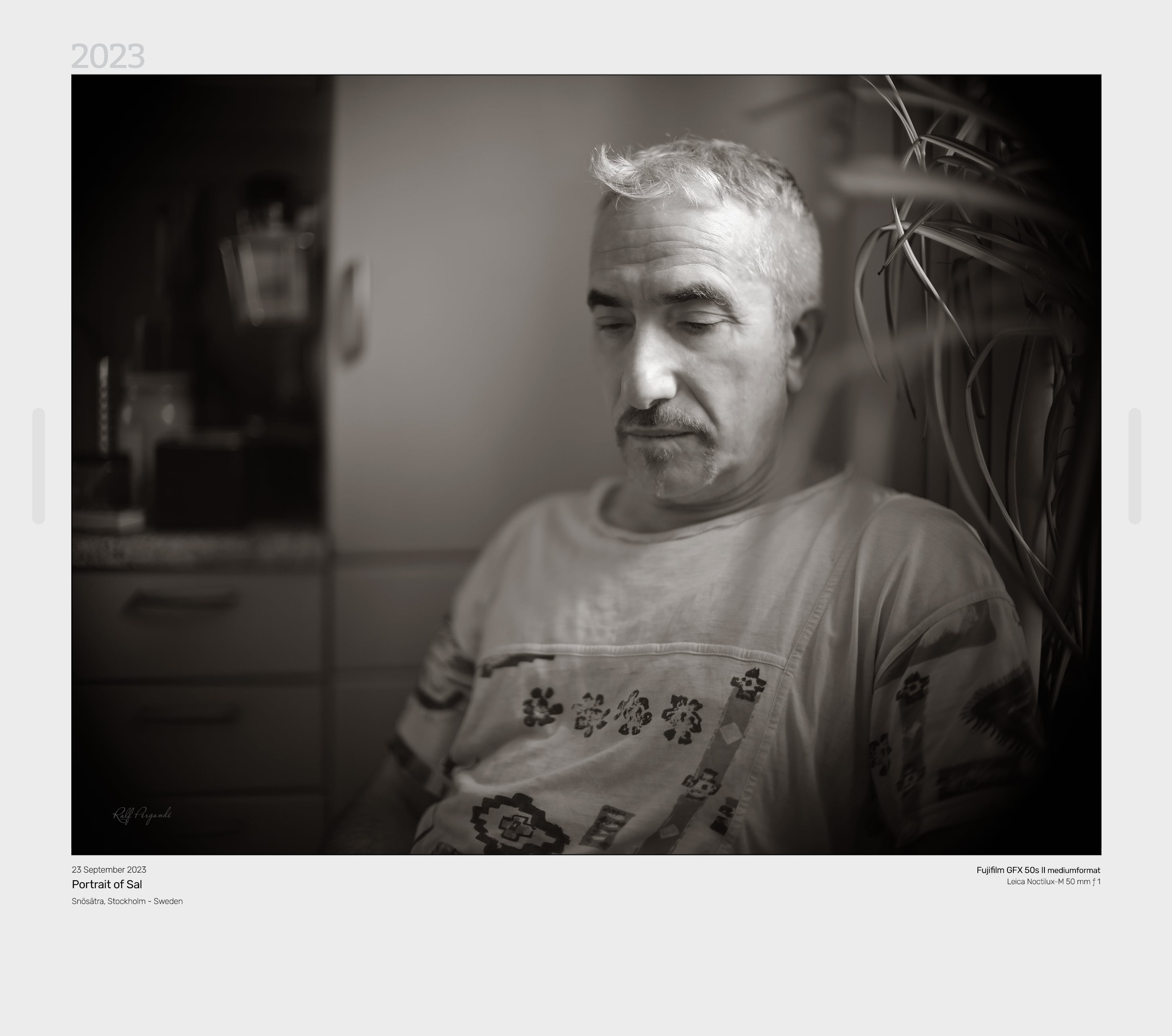
Leica Noctilux-M 50/1 (Photo of Sal)
The Classic Queen of the Night, hard vignettes severely on Fujifilm GFX cameras, just saying. It would benefit from the 35mm mode, of course. Because the GFX has a very thick sensor stack - leading to blurry corners - but with a Noctilux for portraits - that does not really matter. Nothing is really in focus at the borders with this lens anyway, when using it at the extreme ƒ 1 aperture.
Canon EF 50/1.2 L
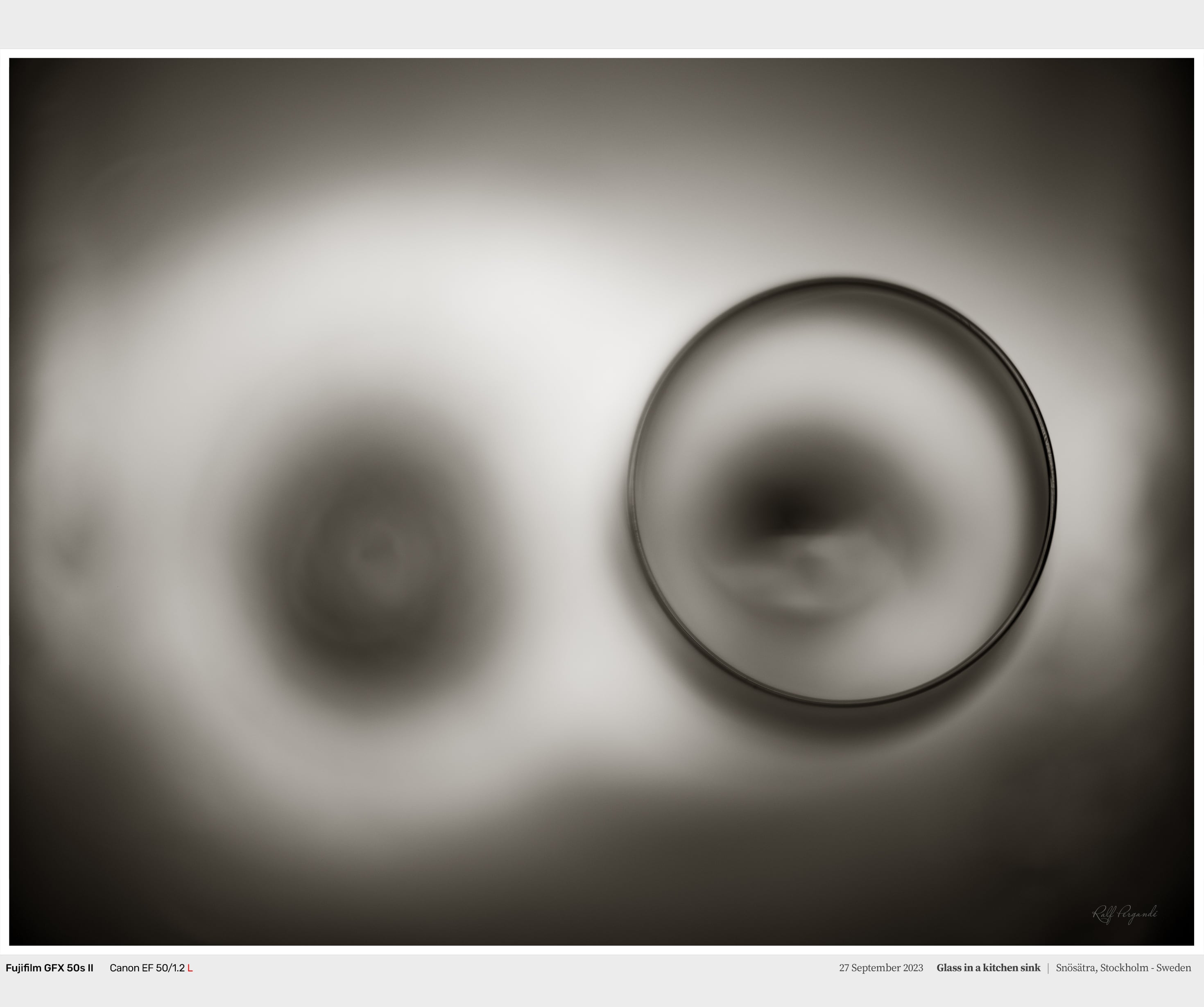
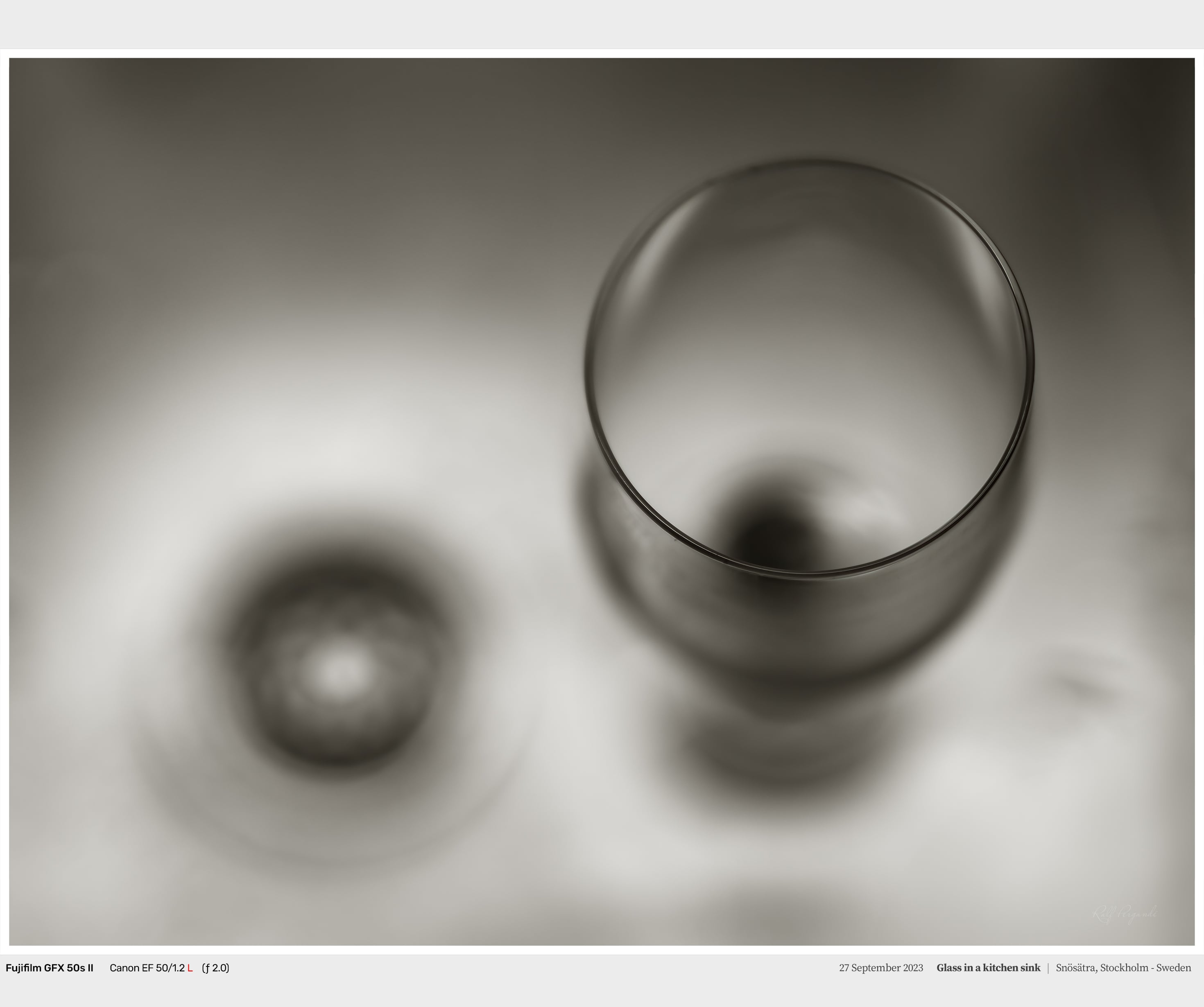
You could for example use the Canon EF 50/1.2 L lens - that should be fun. It actually works even on the entire 33x44mm sensor, if you lighten up the corners and are close to the subject. It isn't ideal in any way - but gives some truly extreme bokeh effects.
Wait.
I think i tested this once (see photos below) with the GFX 50s II camera (33x44mm, e.g. not fullframe) back in 2023. Albeit i used a funky, not really reliable working "Viltrox EF-GFX" adapter. Never with the latter Fringer EF-GFX pro adapter.
So, I should actually test some Canon EF lenses again, now with the better AF in the GFX 100s II camera !
Exotic combo
I would use this combo for experimental type of photography. Because you can really get weird, interesting, different image expressions with this lens on a Fujifilm GFX camera (via Fringer EF-GFX Pro (FR-EFTG1) adapter). |